
Text
Gusev
Anton Chekhov ·  Russia · 1890
Two soldiers, two diseases, one ship. Both encounter different ends, and we glean a bit about their past lives from the meager interactions they share.
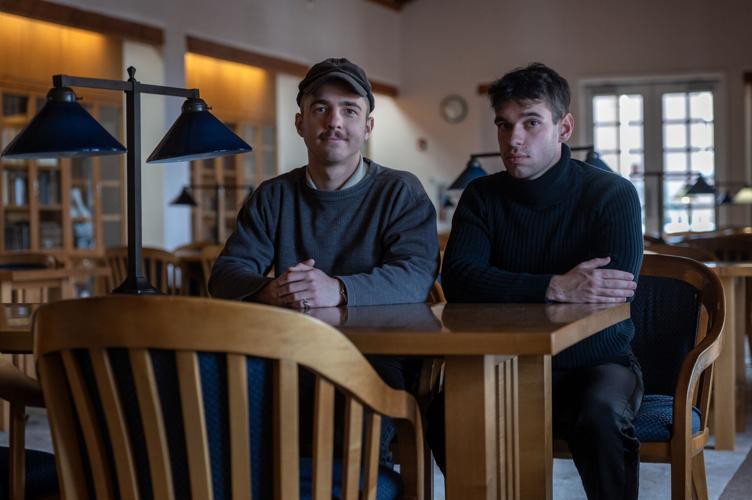
Svet began in December 2023 with two students at St. John’s College in Santa Fe, New Mexico: one who grew up between Minsk and Kyiv, and one from Russia. Their countries were at war with each other, and they sat in the same seminar room.
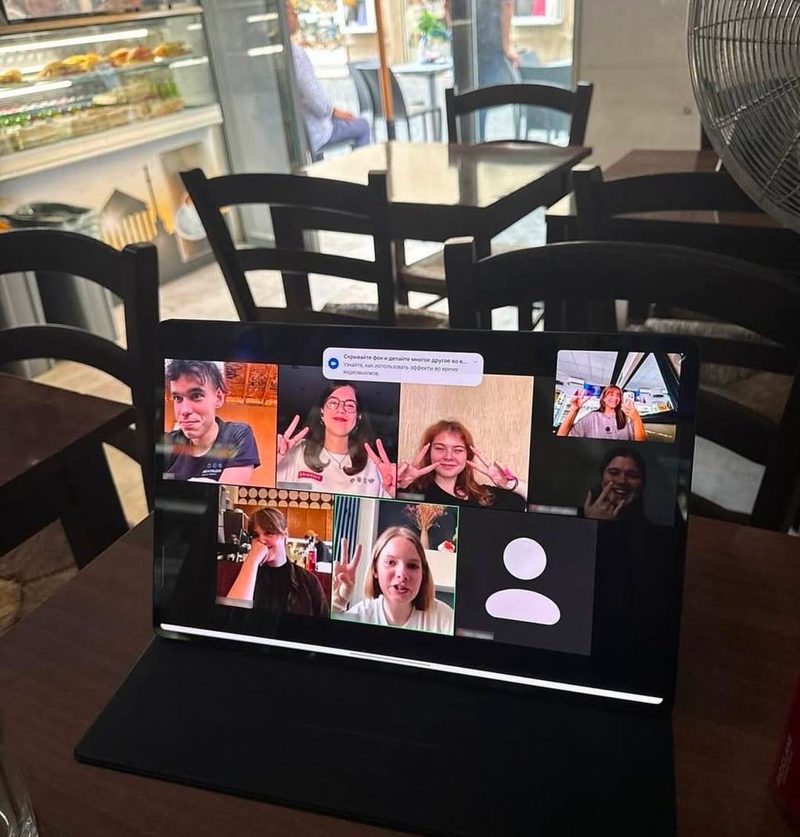
In summer 2024, a $10,000 Projects for Peace grant paid for our first course. Teenagers from Russia, Ukraine and Belarus read through shared classical literature of the region together while the war was already underway, and spoke across a divide the world had come to see as absolute.
We ran two more courses for students from our home region and then brought the work to teen centers in New Mexico and a classroom in New York. Both of us are graduates of St. John’s College, and Amir is also a graduate of the UWC international school in Armenia. St. John’s gave us the method and UWC the vision, and in 2026 UWC endorsed us as an official short course partner. We now combine local and global work: in New Mexico and broader US in-person and with international students online.
He saw above him the high, eternal sky, unclear yet infinitely deep and alive with light [svet].
Svet comes from a stem shared by Russian, Belarusian and Ukrainian. It means both light and world. Tolstoy’s vision reminds us that true peace begins in the human heart. We chose it because our courses aim to kindle that same light in young people.
Wars like those in Ukraine and Gaza grow out of an everyday breakdown of trust, attention and dialogue. Old grievances go unspoken until they harden.
Schools reward memorizing over the questioning and listening that it takes to understand someone on the other side.
It arises in dialogue: through reflection, disagreement, and the shared search for meaning.
At the core is peace
For us, peace is not the mere absence of war; it is the presence of understanding.
To counter the roots of violence, caused in part by a crisis of attention among the next generation, we run guided, dialogue-based courses in classical literature that help teens learn to listen, think, and speak in ways that create connection.
Svet Peace Project envisions a world where young people recover depth of thought, compassion, and mutual understanding, and build communities where peace is practiced daily through dialogue, reflection, and the courage to engage one another with honesty and care.
We focus on classical texts, paintings, and films that have survived because they ask questions that do not go away.
A few days before, everyone gets a short work: a story, a film, or a painting. Each person comes to the seminar with one observation and one question.
Everyone shares their opening questions, and the seminar leader concludes with their own.
Students answer one another and point back to the work to support what they say. The leader slows the conversation down, emphasizes important moments, and makes sure every voice is heard.
The aim is to understand the work better than anyone could alone instead of dismissing or agreeing with it prematurely.
After the last session, each student turns one line or question from the work into a project in their own community.
See what students builtTexts, films, music and art, chosen anew for each course.
Showing 41 works
Text
Anton Chekhov · Russia · 1890
Two soldiers, two diseases, one ship. Both encounter different ends, and we glean a bit about their past lives from the meager interactions they share.
Art
Michelangelo ·  Italy · 1512
Two hands, almost touching. What passes across that small gap, and why did Michelangelo leave it open?
Film
Victor Erice ·  Spain · 1973
Supplementing Márquez' surreal story, this enigmatic Spanish classic explores how art affects our lives.
Music
Bob Dylan ·  United States · 1963
A song made entirely of questions, with no answers attached. Why would Dylan refuse to answer them, and what does that leave to the listener?
Text
William Faulkner · United States · 1939
A classic story to enter into Faulkner. Questions revolve around tensions surrounding justice and family, as a young boy is asked by his father to lie in court.
Art
Raphael · Italy · 1511
Plato points up, Aristotle points out. A painted argument about where truth lives, surrounded by every kind of thinker.
Film
Alfred Hitchcock · United States · 1946
A classic Hitchcock film, with great suspense, subtle meanings, and beauty of marriage. A great film to teach close reading.
Text
Yasunari Kawabata ·  Japan · 1924; 1949
Two beautiful parable-like stories about the magic of childhood and challenges of maturity.
Art
Francisco Goya · Spain · 1823
A father devours his child, painted on a wall of Goya's own house. A hard image of power, fear and what we sacrifice to keep control.
Text
Rabindranath Tagore ·  India · 1892
A Bengali classic about a writer dealing with a Cabuli fruit seller who discovers more similarities than differences between the two of them.
Art
Vincent van Gogh ·  Netherlands · 1889
A village sleeps under a sky that will not stay still. Is it wonder or distress, and how can you tell from the paint alone?
Film
Stanley Kubrick · United States · 1968
Widely accepted as the best film of all time, Space Odyssey is a slow and meditative exploration of humanity's most fundamental experiences: ambition, anger, and wonder.
Text
Gabriel José García Márquez ·  Colombia · 1968
A puzzling story about an aboriginal tribe discovering a drowned body that transforms their perception of themselves, culture, and reality.
Art
Edvard Munch ·  Norway · 1893
A figure on a bridge, a sky on fire, and a sound only he can hear. How does a painting make a private panic feel public?
Film
Alfred Hitchcock · United States · 1954
Arguably Hitchcock's best film, Rear Window is really a lesson in close reading. So much is happening, and so little is explained, that you're left to wonder what you missed.
Text
Flannery O'Connor · United States · 1953
A tale about a failing teacher who fails both herself and others. Dark, funny, and incisive about what teaching should not be.
Art
Edvard Munch · Norway · 1894
A crowd of pale faces moves toward us under a blood red sky. A companion to The Scream: what changes when the fear belongs to many people?
Film
Yasujirō Ozu · Japan · 1953
A close study of the vices and virtues of a modern urban family. No moving shots for 2+ hours.
Text
Anton Chekhov · Russia · 1894
Young teacher comes to realize his new marriage may have a rather horrifying underbelly.
Art
Frida Kahlo ·  Mexico
Self-portrait after self-portrait, each one a statement. What does it mean to look at yourself this long and this honestly, and who is the painting for?
Film
Charles Laughton · United States · 1955
Going along with Faulkner's interest in children's encounter with justice, this classic Appalachian thriller provides interesting commentary on family, religion, and abuse.
Text
Flannery O'Connor · United States · 1952
A young man's encounter with a Hollywood actor in a gorilla's suit changes his life forever. A comical yet deeply macabre story about human nature by a master of stories.
Film
Claude Jutra ·  Canada · 1971
Helping introduce Alice Munro, Jutra's classic Canadian coming-of-age story captures Canada in a similar timeframe of the 40s.
Text
Leo Tolstoy · Russia · 1905
A beautifully laconic story of a young boy's selfless sacrifice for his family. Sometimes called a Tolstoy's late masterpiece in short prose.
Text
Anton Chekhov · Russia · 1894
An old coffin-maker overcomes his antisemitism through the shared love of music. A beautifully deep story from a Russian master.
Text
Anton Chekhov · Russia · 1896
A beautifully sad love story, along with a large question Chekhov poses: how should we live our lives, in leisure or in strenuous works?
Text
Yuri Mamleev · Russia · 1980
An ordinary Soviet clerk encountering his death, evoking deep philosophical questions about human life and its limits,
Text
Aleksandr Solzhenitsyn · Russia · 1973
A history of the Soviet camps built from the voices of those who survived them. What does it take to tell the truth about a country, and what does it cost?
Text
Svetlana Alexievich ·  Belarus · 2013
Ordinary people talk about the end of the Soviet Union and what came after. History told by the ones who lived it, with all its contradictions.
Text
Nikolai Ostrovsky ·  Ukraine · 1932
A Soviet classic about a boy who becomes a believer. Why did it move a whole generation, and what does it ask of a reader today?
Text
Michel de Montaigne ·  France · 1580
Montaigne asks who the real barbarians are: people far away, or us. A sixteenth century essay that still unsettles what we call normal.
Text
Alice Munro · Canada · 1968
A young high school girl faces two visions of life: one conforming to people around her, and another of paving her own way.
Text
Vladimir Nabokov · Russia · 1927
A psychologically ambiguous story about the family reconnecting after being separated for seven years due to war.